Dental Crowns and Bridges
Get Beautiful, Lifelike Restorations
Repair Damaged Teeth With Dental Crowns & Bridges in Worcester
A complete, healthy smile makes it easier to eat what you love, speak with confidence, and feel good about the way you look. When a damaged or missing tooth gets in the way of that, dental crowns and bridges in Worcester can bring everything back.
Crowns and bridges support your long-term oral health. They protect weakened teeth and prevent surrounding teeth from shifting. They help you maintain the kind of smile that makes a strong impression in every situation.
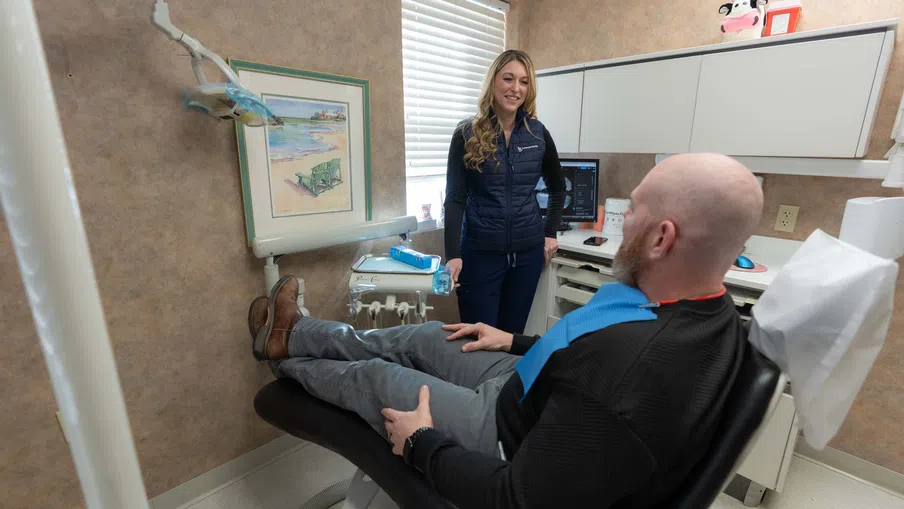
Doctor Stanley Levenson Talks About Dental Crowns and Bridges
Discover Crown & Bridge Treatments, Including Implant Options
Standard Crown
A ceramic crown fits over a damaged or decayed tooth, restoring its shape and appearance. The discreet repair blends naturally with your smile.
Partial Crown
For teeth that don't need full coverage, an inlay or onlay repairs the damage while keeping as much healthy tooth structure as possible.
Implant-Supported Crown
A single missing tooth can be replaced by attaching a custom crown to a dental implant. This gives you a stable and natural-looking result that also helps stop bone loss in your jaw.
Standard Bridge
A bridge closes the gap left by one or more missing teeth in a row by anchoring securely to the healthy teeth on either side.
Implant-Supported Bridge
Experience a Smooth Tooth Restoration Process
From there, your dentist will outline every step of the process. You will always know what to expect and why, so you can make decisions that feel right for you.
If dental visits make you nervous, you're not alone. NuCalm uses calming music to block out the sights and sounds of the office, helping you feel at ease from start to finish. Oral sedation is also available for those who need a greater level of comfort.
To find out how dental crowns and bridges in Worcester can help you, reach out to our team today.
Frequently Asked Questions About Dental Crowns and Bridges
Q What are dental crowns and bridges?
Dental crowns and bridges are restorative treatments that repair damaged teeth and replace missing ones. A crown fits over a single tooth to restore its shape and strength. A bridge fills the gap left by one or more missing teeth by anchoring to nearby teeth or implants.
Q When does a tooth need a crown?
A tooth may need a crown when it is cracked, severely decayed, worn down, or weakened after a root canal. A crown fits over the remaining tooth structure to restore its shape and protect it from further damage. A crown allows you to bite and chew normally again.
Q What is the difference between an inlay and an onlay?
An inlay repairs damage within the cusps of a tooth, while an onlay covers a larger area that extends over one or more cusps. Both preserve more of your natural tooth structure than a full crown and are a good option when the damage is moderate rather than severe.
Q How long do dental crowns last?
With proper care, a dental crown can last five to seven years or longer. Brushing and flossing regularly, avoiding hard or sticky foods, and keeping up with routine dental visits all help extend the life of your crown.
Q What is a dental bridge?
A dental bridge fills the gap left by one or more missing teeth. An artificial tooth spans the space and anchors to the healthy teeth on either side, or to dental implants. The result is a natural-looking smile that lets you eat, speak, and chew with confidence.
Q Will my crown or bridge look natural?
Crowns and bridges are crafted to match the color, shape, and size of your natural teeth. Ceramic materials blend with your surrounding teeth, making it difficult to distinguish your restoration from the rest of your smile. The result looks completely natural.
Q Is the crown or bridge procedure painful?
Crown and bridge procedures are performed with local anesthesia, so you should not feel pain during treatment. Some sensitivity or mild discomfort afterward is normal and typically fades within a few days. NuCalm and oral sedation are available if anxiety makes dental visits feel difficult for you.
Q How does an implant-supported bridge prevent bone loss?
When a tooth is lost, the jawbone in that area shrinks over time due to a lack of stimulation. Dental implants mimic natural tooth roots, stimulating the bone and helping it maintain its density. A traditional bridge does not offer this kind of protection.